Weatherproof sealant is one of the cheapest line items in a facade specification and one of the most consequential. Specify it well and the building stays watertight for twenty-plus years; specify it loosely and the facade contractor inherits a long warranty argument. This piece walks through the factors that drive specification decisions on commercial facades.
Substrate combinations decide the system
The first question on any facade joint is what materials meet at the joint and what their surfaces are like. Glass-to-aluminium joints need a sealant compatible with both non-porous, low-energy surfaces. Concrete-to-brick joints introduce two porous substrates with different absorption profiles. Metal panel to render combines a smooth metal face with a porous, friable substrate that may need priming. Neutral cure silicones suit most non-porous combinations and many stone substrates; polyurethanes offer high movement capability and good adhesion to concrete; MS polymer hybrids sit between the two and handle a wide range of mixed combinations. Specifying without checking the substrate combination is the single most common path to early failure.
Movement capability has to match joint movement
Every sealant carries a movement capability rating, expressed as a percentage of joint width. Specifiers need that rating to match the actual movement the joint will see. Thermal expansion of long metal panels can exceed five millimetres across a bay. Concrete drying shrinkage adds movement in the first years of the building. Movement joints on tall buildings see structural deflection on top of thermal cycling. A sealant rated to twenty-five percent in a joint that sees forty percent will fail cohesively – tearing within itself – within a few years regardless of how well it was applied.
Joint geometry travels with the material choice
Sealant material choice and joint geometry are not independent decisions. Width sets how much flex the sealant has to give. Depth, controlled by backer rod position, sets the hourglass profile that performs best under cyclic movement. Three-sided adhesion – where the sealant bonds to the backer instead of just the joint sides – shortens service life sharply. Joint geometry is sometimes left to chance on site, but the specification can set the expectations – width, depth, backer type and edge preparation – so the installer has a clear target rather than a judgement call.
Exposure varies across a single building
A single commercial facade often sees very different exposure across its elevations. South and west elevations carry more UV. North elevations stay damp longer and bias toward biological growth. Coastal and industrial sites add salt, chlorides and acidic pollutants. High-rise corners see higher wind pressures at joints. Specifying a single product across the whole envelope is sometimes the right answer; checking each elevation against the worst exposure it will see makes sure the choice holds up across the building, not just on the easy faces.
Application standards are half the performance
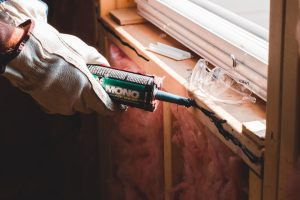
The best-specified sealant performs only as well as the install. Surface preparation, primer use where required, joint cleanliness, weather conditions during application, tooling pressure and the bead profile all sit between specification and finished performance. Most major manufacturers run approved applicator schemes that combine training, audit and warranty access. For a commercial facade with a long-life warranty expectation, specifying that sealant is applied by a manufacturer-approved applicator is the most practical single lever a specifier has to protect downstream performance.
On commercial facade projects with weatherproof sealant scope, our weatherproof sealant services support specification, application and long-term resealing across the UK.
Talk to us about your project
If a commercial facade project is at specification stage and the sealant package is open, get in touch with our team for a quick quote here.