Neutral Cure Sealants for Lead Flashing
Lead flashing is built to last, so when leaks appear around chimneys, abutments or roof junctions, the issue is often not the lead. It is more likely the seal at a joint, lap or penetration that has failed over time. That is why sealant choice matters. Some general-purpose sealants are not suitable for lead, particularly in exposed roof conditions where UV, rain and temperature swings are constant. If the wrong sealant is used, you can end up with staining, poor adhesion and repeat failures that create avoidable remedial work.
Why lead flashing needs a compatible sealant
Lead is a soft metal, and it can react badly with certain sealants. Acid cure products or unsuitable formulations may cause discolouration, surface staining or corrosion, and even where the visual impact is minor, the bigger problem is often loss of adhesion. Once small gaps form, water can track behind the flashing, and the defect can present as a recurring leak rather than an obvious sealant issue.
Neutral cure sealants are widely used for lead flashing because they cure without releasing acidic by-products that can react with lead surfaces. They are designed to perform on sensitive metals while staying stable and flexible in external conditions.
What neutral cure means in practical terms
On roofs, movement is normal. Lead expands and contracts, substrates shift slightly and joints are exposed to wind-driven rain. A sealant that becomes brittle, shrinks, or pulls away at edges will not cope for long. Neutral cure sealants are formulated to remain flexible once cured, which helps them maintain a watertight seal as the roof detail moves through seasonal changes.
Signs the wrong sealant has been used
Incompatibility is not always obvious at first. Problems often develop gradually, then show up during heavy weather or after repeated thermal cycles. Common indicators include:
- Staining or discolouration on lead surfaces
- Cracking, splitting, or shrinkage in the sealant line
- Sealant pulling away at edges or corners
- Small gaps at laps, joints, or abutments
- Recurring leaks around chimneys, penetrations, or roof to wall junctions
These issues do not automatically mean the lead flashing needs replacing. In many cases, the flashing remains serviceable, and the sealant detail simply needs correcting.
Application matters as much as product choice
Even a suitable sealant can fail early if it is applied poorly. Surface preparation, joint geometry and method all influence performance. Removing degraded sealant without damaging the lead is also important, especially on older installations where the lead may already be stressed by age or movement. A professional approach ensures the sealing detail is designed for the location, exposure and expected movement, rather than treating every joint the same.
How we approach lead flashing sealant work
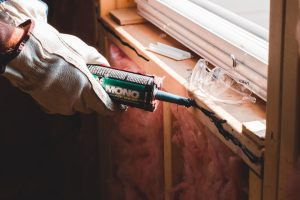
SD Team specifies neutral cure, lead-compatible sealants as standard for lead flashing works, selecting the right approach based on the detail, surrounding materials and exposure level. Our technicians apply sealant as part of wider roofing and building envelope repair programmes, including high-level work and projects on occupied sites.
If you are seeing cracking, staining or recurring leaks around flashing, SD Team can assess whether resealing is appropriate and deliver a repair that restores weatherproofing and is built to last. Learn more about our lead flashing sealant services here.