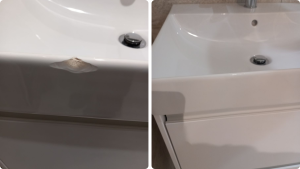
A damaged quartz worktop on a commercial project usually triggers the same question: repair in place, or rip out and replace? The right answer depends on damage type, where the project is in its programme and what the wider scope already commits to.
What in situ quartz repair can address
Localised damage on a quartz worktop is generally repairable without removing the wider run. That includes chips along edges and corners, fine cracks within the surface, burn marks, surface scratches and seams that have lifted or opened slightly. A specialist worktop repair technician can colour-match across most commercial quartz finishes and restore the surface to an acceptable finish for handover. The work is done at the worktop, in the room, often within a few hours per item. For projects with many small items of damage spread across multiple units, in situ repair scales more easily than coordinating multiple worktop replacements.
When replacement is genuinely the right call
Replacement makes sense in a smaller set of cases. Structural cracks running across a full worktop, repeated failure of the same area, severe heat damage across a wide zone, or damage that has compromised supporting fixtures will all typically push a worktop into replacement scope. The other genuine replacement scenario is where the substrate beneath the worktop is failing – water damage to carcasses, structural movement or installation faults can mean the surface is the symptom rather than the issue. In that case, repairing the visible damage will not resolve the underlying cause.
Programme impact: the hidden cost of replacement
Replacement carries programme cost that is not always priced in at the decision stage. Lead times on bespoke or matched quartz can run to weeks, sometimes longer for branded or imported finishes. The replacement involves uninstalling appliances, isolating services, removing the existing worktop, templating, manufacturing and installation. Each step is a coordination point between trades, suppliers and the site team. A repair takes a single visit by one specialist, usually completed the same day. On programmes with tight handover windows, that gap between repair and replacement timing is often the deciding factor.
Cost framing for contractors and clients
Cost framing is straightforward when set out clearly. The direct cost of repair is almost always lower than the direct cost of replacement. Replacement also brings indirect costs – other trades held back, programme extension, additional management time, possible client liquidated damages if delays cross handover. Repair costs are typically per item and quoted against a defined scope. Where a client is questioning the durability of a repair, evidence and warranty terms from the repair specialist matter – it gives the contractor a clear position to present to the client when defending the recommendation.
How to scope the decision quickly
A quick decision framework helps on busy projects:
- Confirm the damage type and extent against photographs.
- Ask whether the substrate beneath the worktop is sound.
- Assess whether the project programme can absorb the lead time of a replacement.
- Get a specialist view on whether the damage is repairable to a colour-matched finish.
If the answers are localised damage, sound substrate, tight programme and yes to repair feasibility, repair is the right route. Where any one of those is in doubt, a site visit by the repair specialist will clarify it.
On most commercial projects with localised quartz damage, specialist quartz worktop repair is the faster, more programme-friendly route.
Talk to us about your project
If you are weighing up quartz worktop repair against replacement on a current or upcoming project, SD Team can review the damage, confirm scope and provide a repair recommendation. Get in touch to share the scope and the timing window you are working to.