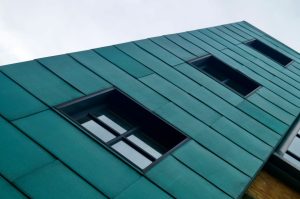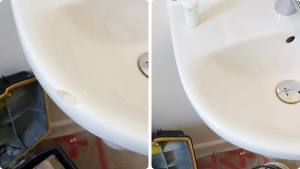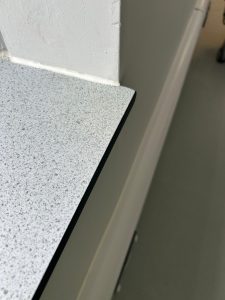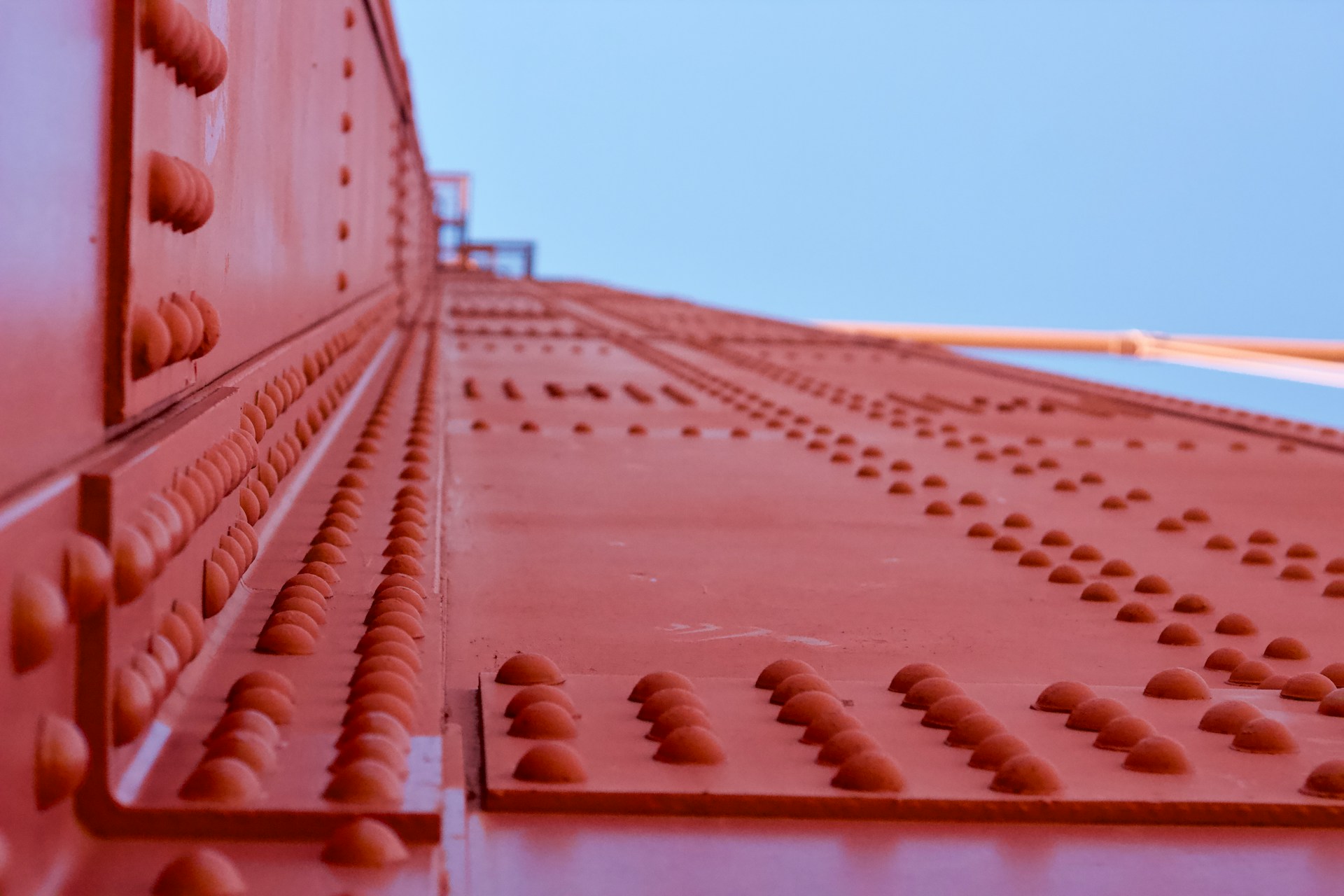
The finished repair should improve the overall appearance
In most cases, the reason for carrying out a powder coated surface repair is straightforward. The damaged area is affecting presentation, handover quality or the appearance of a visible part of the building. A well-executed repair should help the surface sit more consistently within the wider finish and remove the distraction of obvious chips, scratches or localised marks.
That does not mean every repair should be described as invisible. It means the repair is carried out to improve the appearance of the damaged area and provide a more practical outcome than replacing the full item.
Some repairs are less noticeable than others
The visibility of a finished repair often depends on the nature of the original damage. Small chips or localised scratches on a relatively even surface are generally a different situation from more severe damage, edge damage or defects across a larger visible area.
Other factors can also affect the final result, including:
- the colour and texture of the original powder coated surface
- the location of the damage
- how exposed the area is to light and close inspection
- the age and condition of the surrounding finish
- whether the damage sits on a flat, simple surface or a more detailed profile
These details matter because buyers are usually not judging the damaged spot in isolation. They are judging how the repaired area looks within the wider frame, panel or feature.
Highly visible areas need a realistic assessment
Shopfronts, entrance systems, glazed surrounds and façade details often attract more attention than back-of-house or lower-priority areas. In those settings, even relatively small defects can become more noticeable simply because the element is front-facing and seen regularly by building users, customers or project teams.
That is why it is important to assess the location properly rather than assume every repair will deliver the same visual outcome. A realistic view at the quoting stage helps avoid overpromising and gives the client a clearer idea of whether repair is the right option.
Repair is often chosen because replacement is more disruptive
On many projects, the choice is not between a damaged surface and a perfect new one delivered with no impact. The real choice is often between a specialist localised repair and a much more disruptive replacement process.
For commercial buildings, residential developments and live operational sites, replacement can mean more cost, more programme pressure and more disruption to the wider job. Where the damage is localised, repair is often the more practical route because it improves presentation without removing the whole element.
The surrounding surface matters too
A repair does not happen on a brand-new test panel. It happens on a real building element that may already have some age, weathering or general wear. That wider context can affect how the repaired area is perceived once the work is complete.
In some cases, the damaged spot is the only issue and the improvement is straightforward. In others, the original finish may already show signs of age, which means the repaired area needs to be judged as part of the whole surface rather than as a standalone patch.
Why honest expectations matter
For this type of repair, clarity is more useful than broad promises. Site managers, contractors and property teams usually want to know whether the damage can be improved to an acceptable standard for the building, the handover or the maintenance programme.
That makes honest assessment important. A specialist contractor should be able to look at the damage, consider the type of surface and explain whether repair is likely to be the most suitable option. In many cases, the goal is a strong visual improvement and a better commercial outcome, not unnecessary replacement.
When repair is usually worth considering
Powder coated surface repair is often worth considering when:
- the damage is localised rather than widespread
- the wider element remains sound
- replacement would be disproportionate to the defect
- appearance matters but the project also needs to control cost and disruption
- the work needs to fit around live site conditions or refurbishment programmes
This is particularly relevant on commercial and multi-unit projects where maintaining standards at handover or during occupation is a priority.
Getting the right advice early
The earlier the damage is reviewed, the easier it is to decide whether repair is the right route. That is useful for snagging, refurbishment planning, ongoing maintenance and visible defects that could affect client perception of the finished building.
A proper review helps establish what is damaged, how visible the area is and whether powder coating repair can provide the right result for the project.