Understanding the type of tile damage
The starting point is understanding what kind of damage is present. Localised issues such as chips, surface cracks, impact marks or staining often affect only the visible finish of a tile. Where the tile remains well bonded and structurally sound, repair is usually a viable option.
More extensive damage, such as widespread cracking caused by subfloor movement or failed adhesive across a large area, may point towards replacement. The key distinction is whether the problem is isolated or systemic.
Assessing the condition of surrounding tiles
Tile damage rarely exists in isolation. A proper assessment looks at the surrounding tiles as well as the damaged area itself. If adjacent tiles are stable, level and securely fixed, repair can often be carried out without disturbing the wider surface.
Where multiple tiles show signs of movement, lifting or hollow spots, replacement may be the more appropriate long-term solution. This is especially relevant in high-traffic commercial environments where durability is critical.
Disruption and access considerations
One of the biggest differences between repair and replacement is disruption. Tile replacement usually involves removing existing tiles, preparing the substrate, allowing adhesives to cure and potentially closing off areas while works are completed.
Tile repair, by contrast, is typically carried out on site in a single visit. This makes it particularly suitable for occupied and operational buildings where access is limited, and downtime needs to be kept to a minimum. In offices, retail spaces, healthcare settings and residential buildings, reduced disruption is often a deciding factor.
Cost, waste and sustainability
Replacement costs extend beyond the price of new tiles. Labour, waste removal, potential matching issues and extended programme time all add up. There is also the risk that replacement tiles will not match existing finishes, particularly where tiles are discontinued or aged.
Repair avoids unnecessary removal and reduces waste, making it a more sustainable option in many cases. By extending the life of existing finishes, repair supports maintenance strategies focused on preservation rather than replacement.
Aesthetic expectations and finish quality
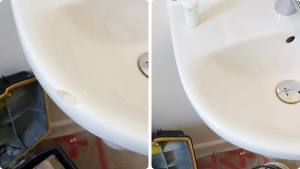
Modern repair techniques allow damaged tiles to be colour-matched and finished to blend with surrounding surfaces. While a repair may still be detectable on very close inspection, the goal is a consistent appearance that meets residential and commercial standards.
Where visual uniformity is critical across a large area, or where damage affects patterned or feature tiles, replacement may still be required. Understanding the visual expectations of the space helps guide the right decision.
When repair is commonly specified
Tile repair is frequently used in maintenance programmes; insurance reinstatement works and refurbishment projects where speed and minimal disruption are priorities. It is also well suited to addressing accidental damage, impact marks and wear in otherwise sound tiled areas.
In these situations, tile repair offers a practical alternative to full replacement, restoring function and appearance while keeping buildings operational.
Getting the right advice
Choosing between repair and replacement is not always straightforward. A professional assessment helps determine the most effective approach based on the tile type, location, extent of damage and how the space is used.
If you are weighing up repair versus replacement for damaged tiled surfaces and want a clear recommendation based on condition and usage, get in touch with us to discuss your building and the most practical way forward.